



You run a cannabis delivery shop. Tonight you're fielding DMs — or punching orders into Dutchie. You open the signup page.
You go to the registration form. You pick a name for your shop's address. It's available. You type your email. There's no field for a credit card.
Ninety seconds later you have a dashboard. It's empty. It's yours.
If you close the laptop now, nothing happens. No card on file. No charge. No sales call tomorrow. You can walk away and the only thing you'll have lost is the time it took to read this.
You don't close the laptop.
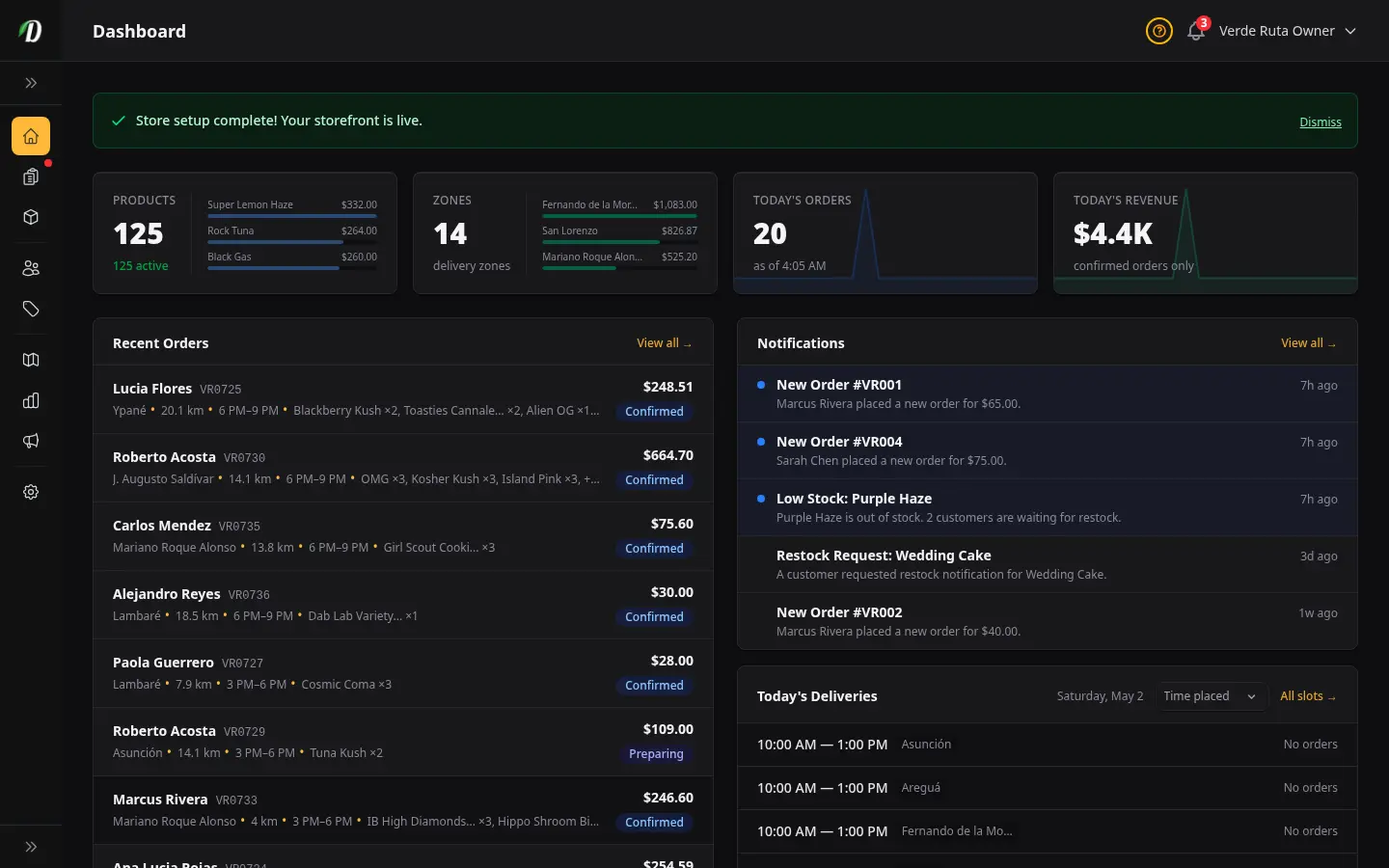
You bring your catalog in — one-click import from Wix, WooCommerce, or Shopify — or you connect an AI assistant and tell it to build the store for you. Or you add products by hand. The product builder still understands weight pricing, gram pools, eighths and ounces, units and multipacks.
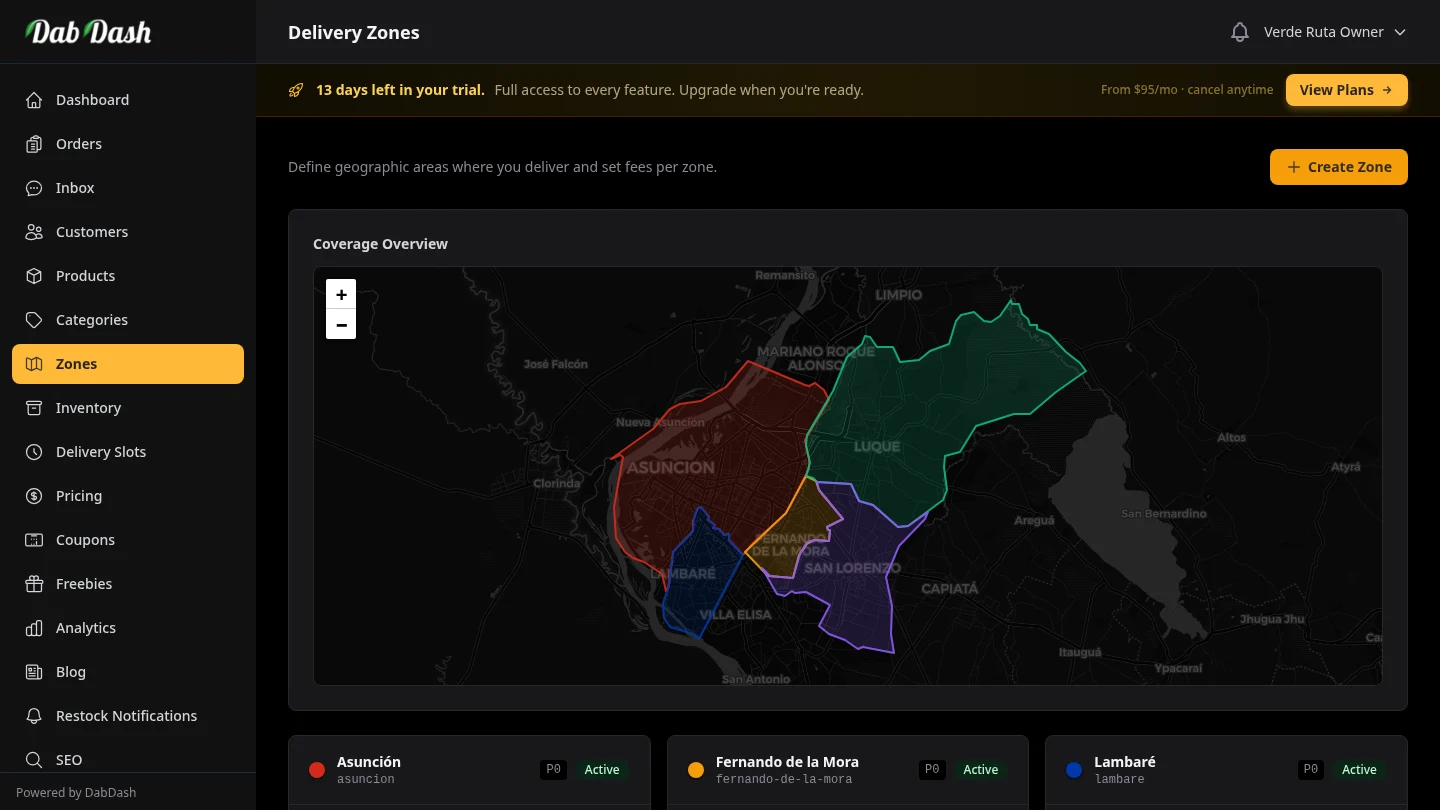
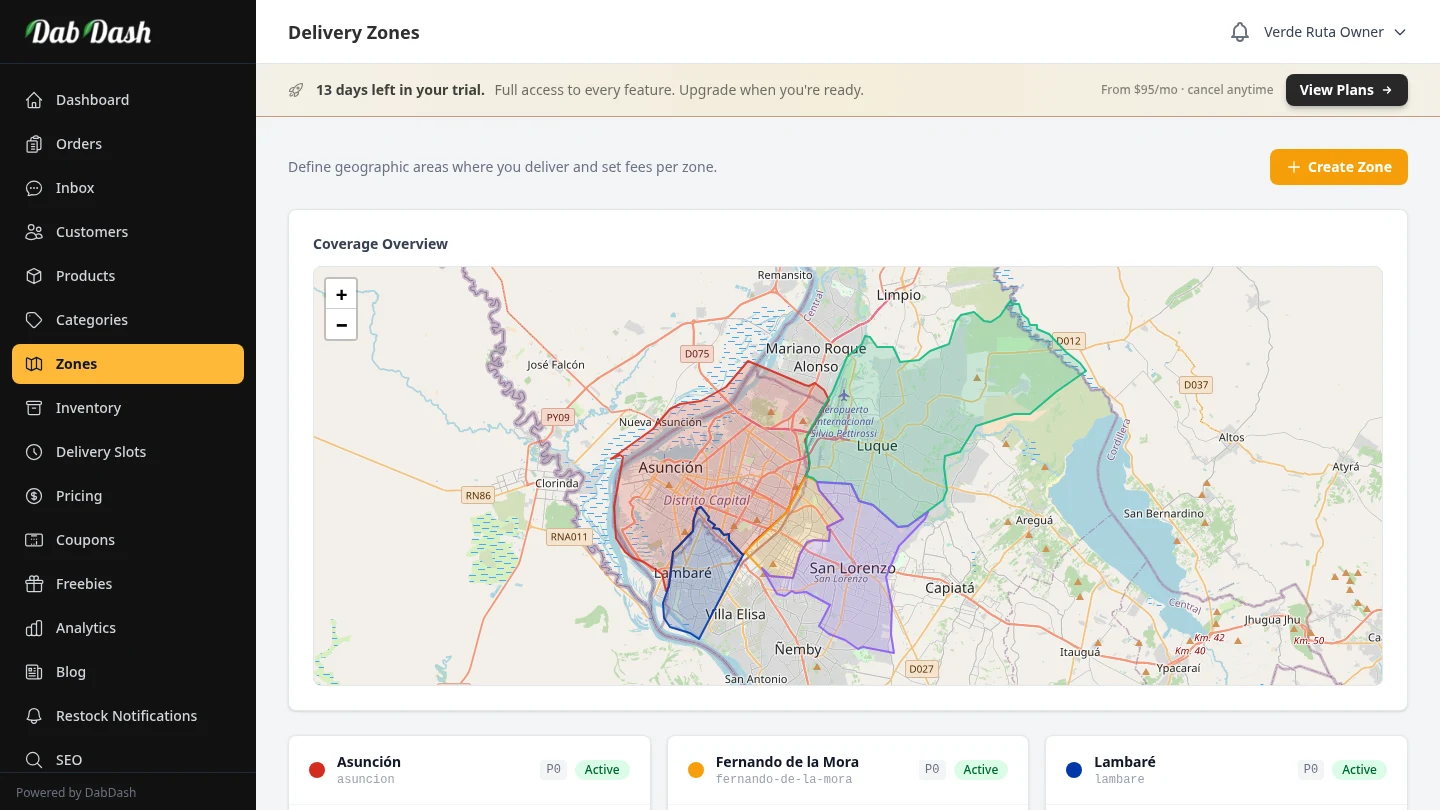
You open the Zones page. One click imports nearby delivery areas; you fine-tune fees and minimums if you want. If you don't deliver — if customers come to you — you turn delivery off and keep pickup. Your shop, your rules.
You connect a domain you already own. Or you don't, and you use the free address. Either way, about twenty minutes from signup, your storefront is live.
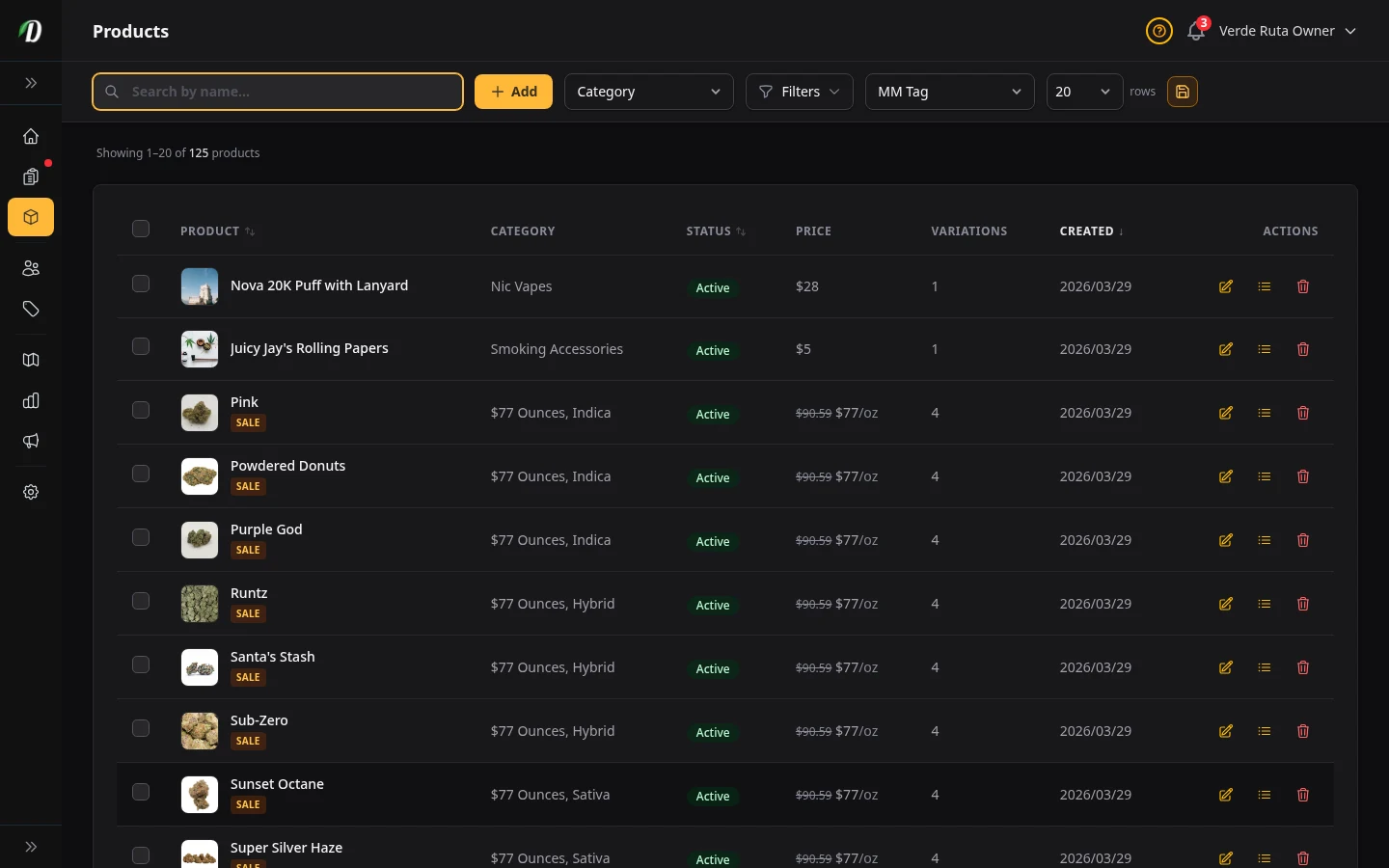
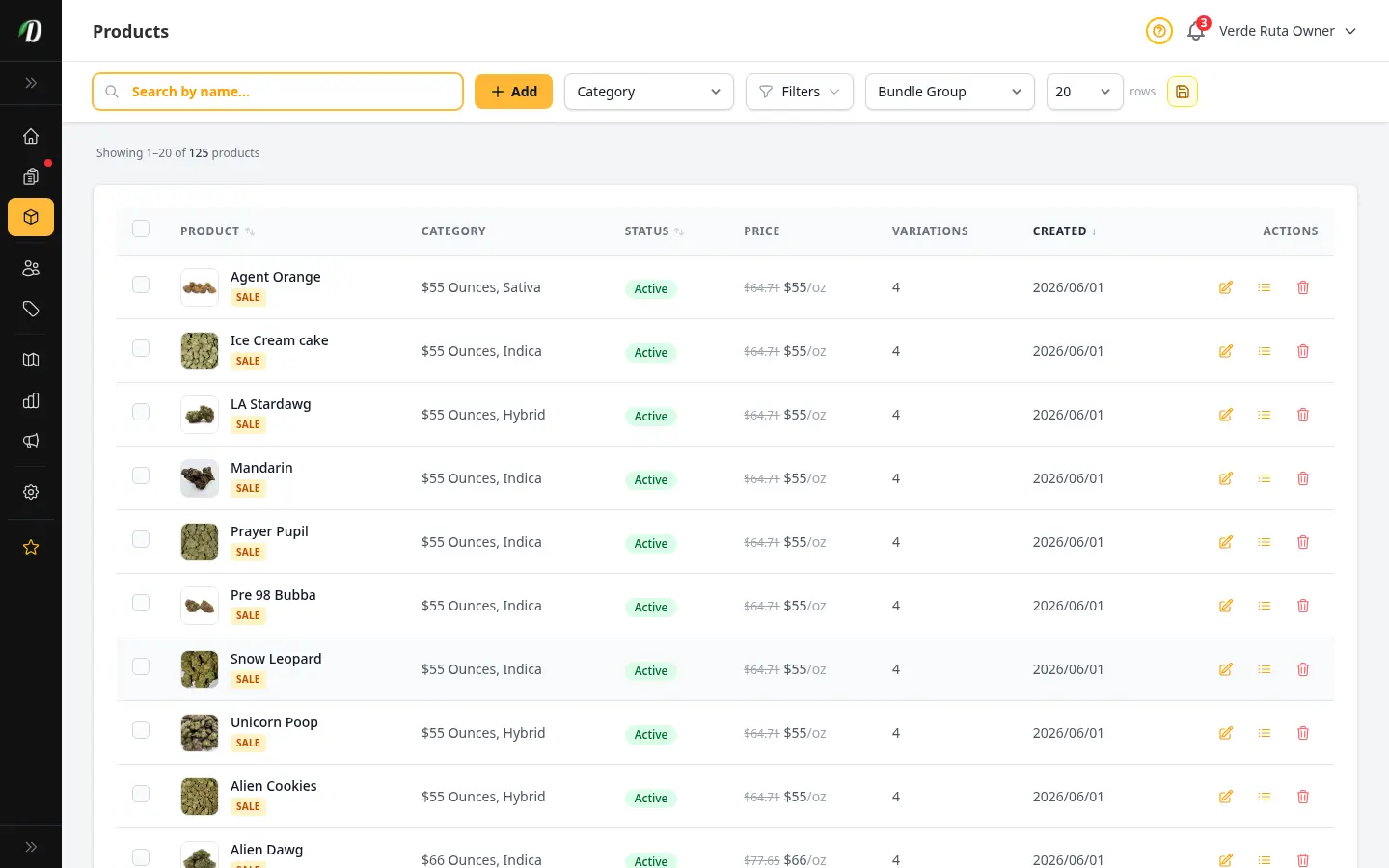
His name is Marcus.
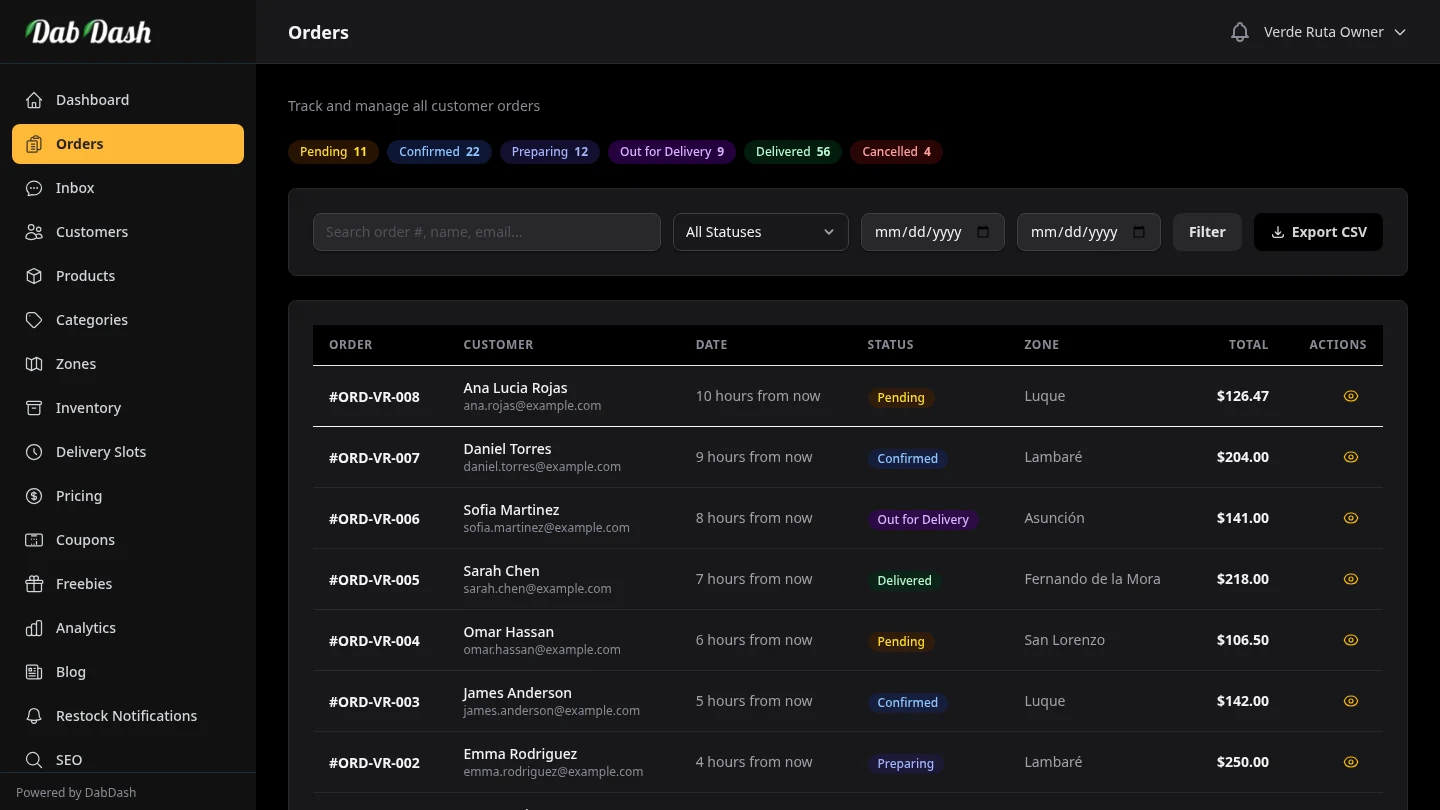
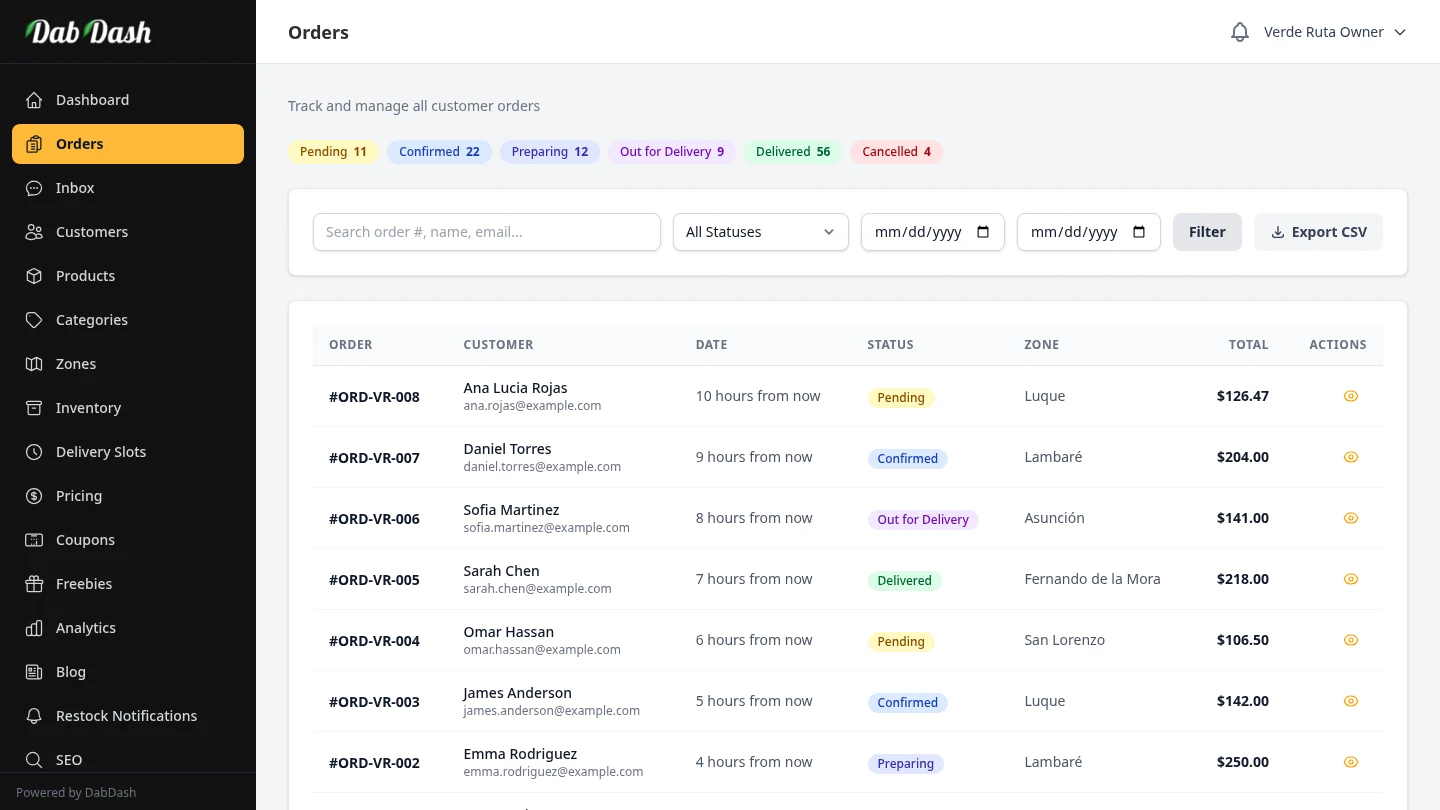
He found you because the link to your shop was somewhere a customer could find it. It doesn't matter how. He found you, and he ordered $87.
He pays in cash — to your driver when she arrives, or to you at the counter when he walks in. There is no payment processor in the middle of this transaction. The money is yours the moment it changes hands. No 3% cut. No chargeback risk. No frozen account.
Your data lives in Iceland. Outside the reach of the regulators who have shut down other cannabis platforms.
This is the part where it starts to feel different from anything you've tried before.
What about Dutchie or Weedmaps?
They take a cut and they own your customer. When she searches your shop tomorrow, she lands on the marketplace, not on you. With this, she lands on your shop — every time.
What stops a payment processor from freezing my account here?
There isn't one. Cash on delivery is the entire model. No middleman to freeze, no chargebacks to fight, no compliance review.
Is this actually real?
The vendor in the opening hit $8,600 on a day in May 2026 — the month this page was written. The platform has been live since 2024, is founder-funded, and is not for sale.
The trial ends. The dashboard tells you what happened: the number of orders, the average ticket, the customers who came back.
You pay $2,400 a year. That's the entire bill. No per-order fee. No transaction cut. No tier upgrade required to unlock the features you've already been using.
Or you don't pay, and your shop comes down, and nothing is on your card — because nothing was ever on your card.
You pay.
You open the dashboard on a Tuesday morning. The seven-day rolling average has crossed $8,600 a day.
You started somewhere lower than that. The shape of the climb is the same: Google indexed your storefront, then it ranked it. Someone nearby typed what they were looking for, and your shop came up. Not a marketplace. Not a directory. You.
You stopped paying for ads around week six. The traffic kept coming anyway.
Your average order went up — because a storefront with photos and a frequently-bought-together row and built-in loyalty does the selling you used to do by hand, or didn't do at all.
You are working fewer hours than you were three months ago. You are earning more than you have ever earned in this business.
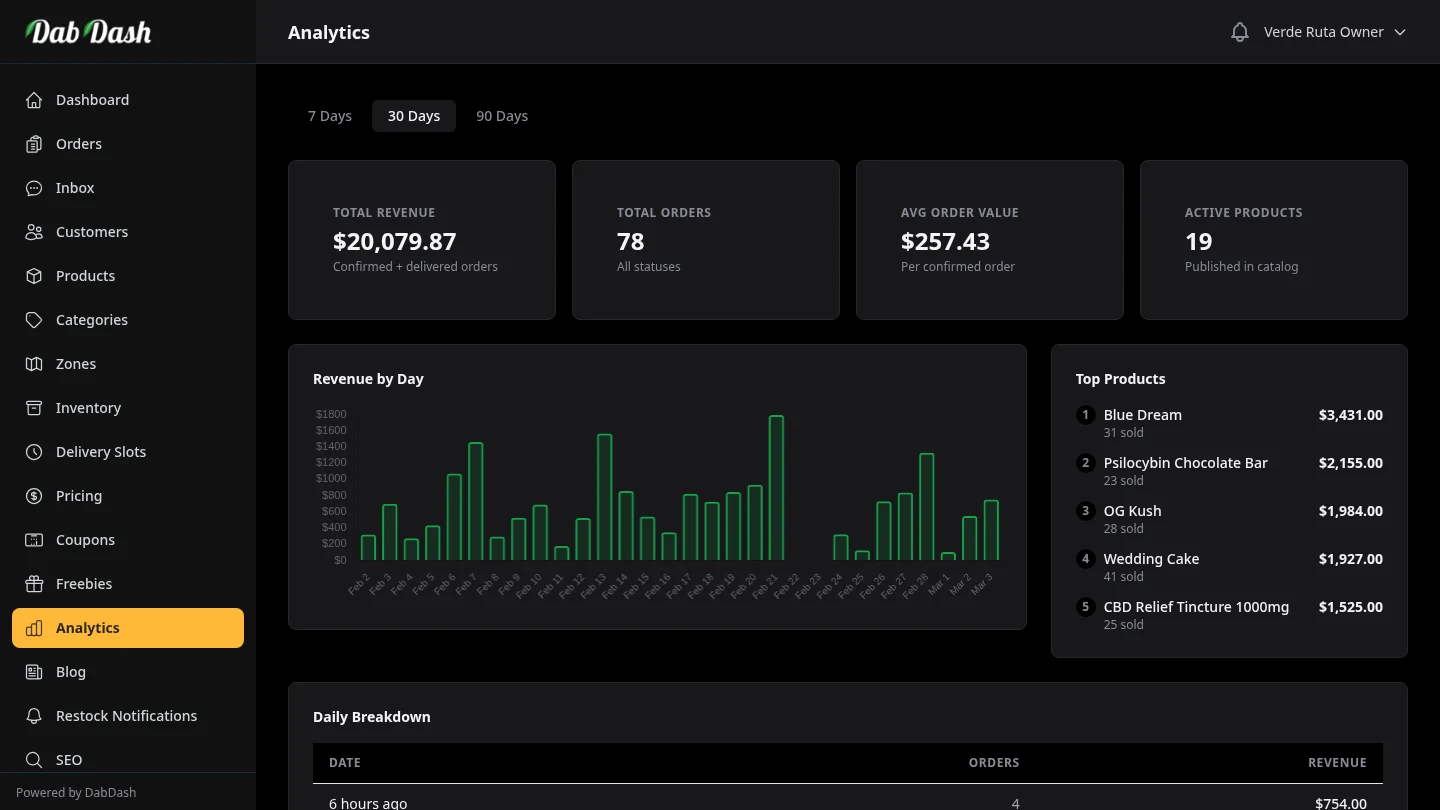
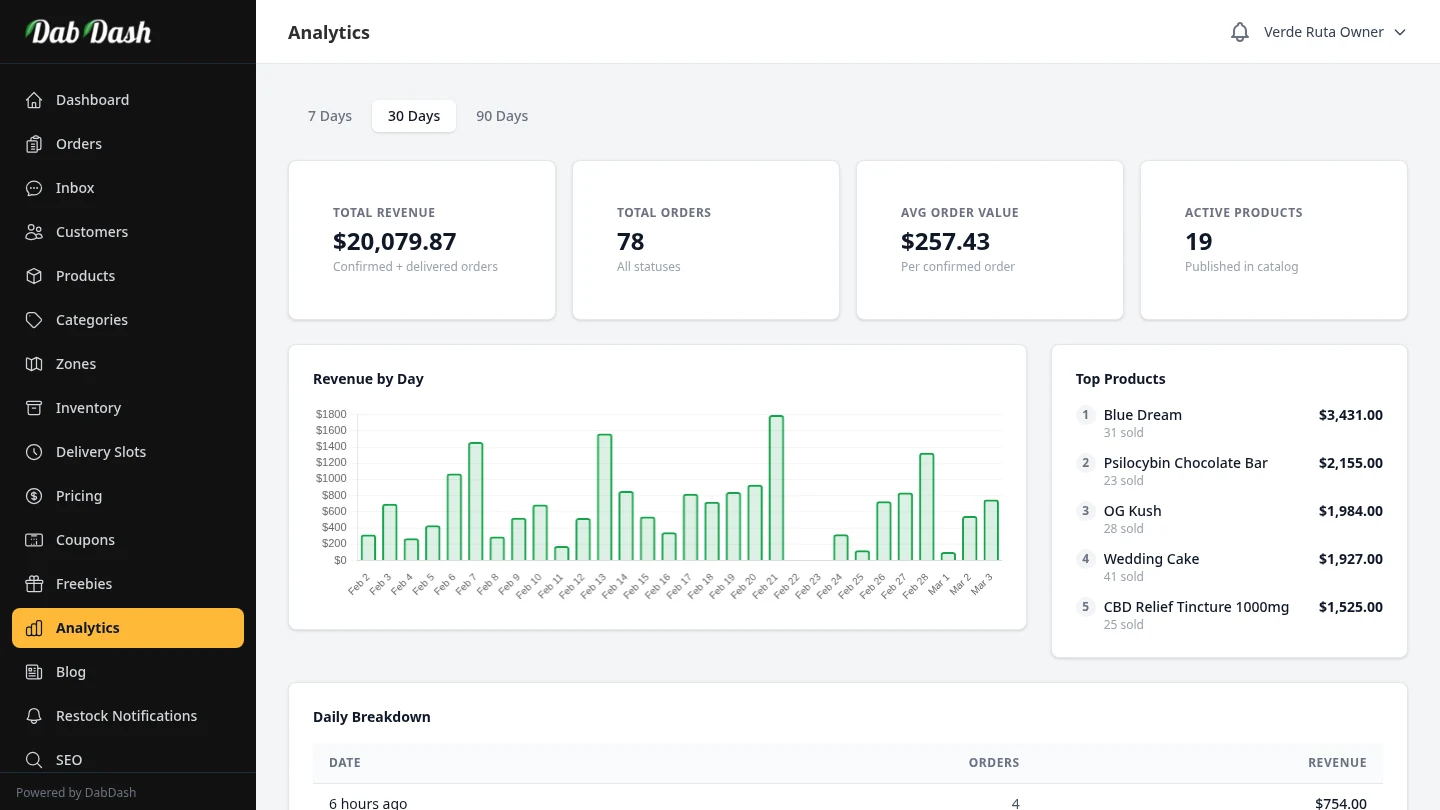
Free 2-week trial. No card. $2,400 USD a year after. Cancel anytime — two clicks, no email required.
The dashboard is doing the work that used to live in your head. Orders come in, they route themselves, they close themselves out. Your day is yours again.
A regular asks how business is. You tell her, honestly: best year you've had.
She asks what changed.
You tell her it's the website. She thinks you're being modest.
You're not.

